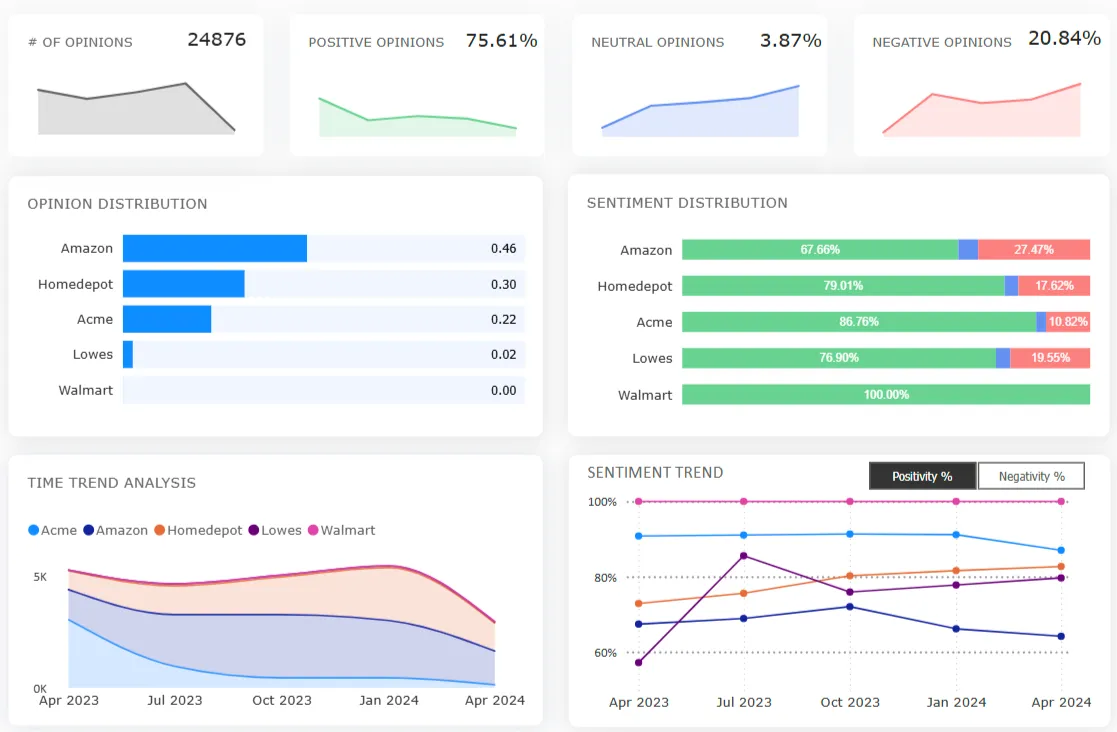

Voice of the Customer: the complete 2026 guide

Last Updated:
January 5, 2026

Reading time:
Time
mins
.webp)
Voice of the Customer (VoC) is the process of capturing, analyzing, and acting on customer feedback to improve products, services, and experiences. It goes beyond collecting survey responses: VoC pulls together data from reviews, support calls, social media, and direct conversations to reveal what customers actually think and feel about your brand.
According to Deloitte research, customer-centric companies are 60% more profitable than those that don't prioritize the customer perspective. Yet most organizations still struggle to connect fragmented feedback into a coherent picture that drives action—only 15% consistently incorporate customer insights into decision-making processes. This guide covers how VoC programs work, the methods and metrics that matter, and how to build a program that turns raw feedback into measurable business outcomes.
What is Voice of the Customer?
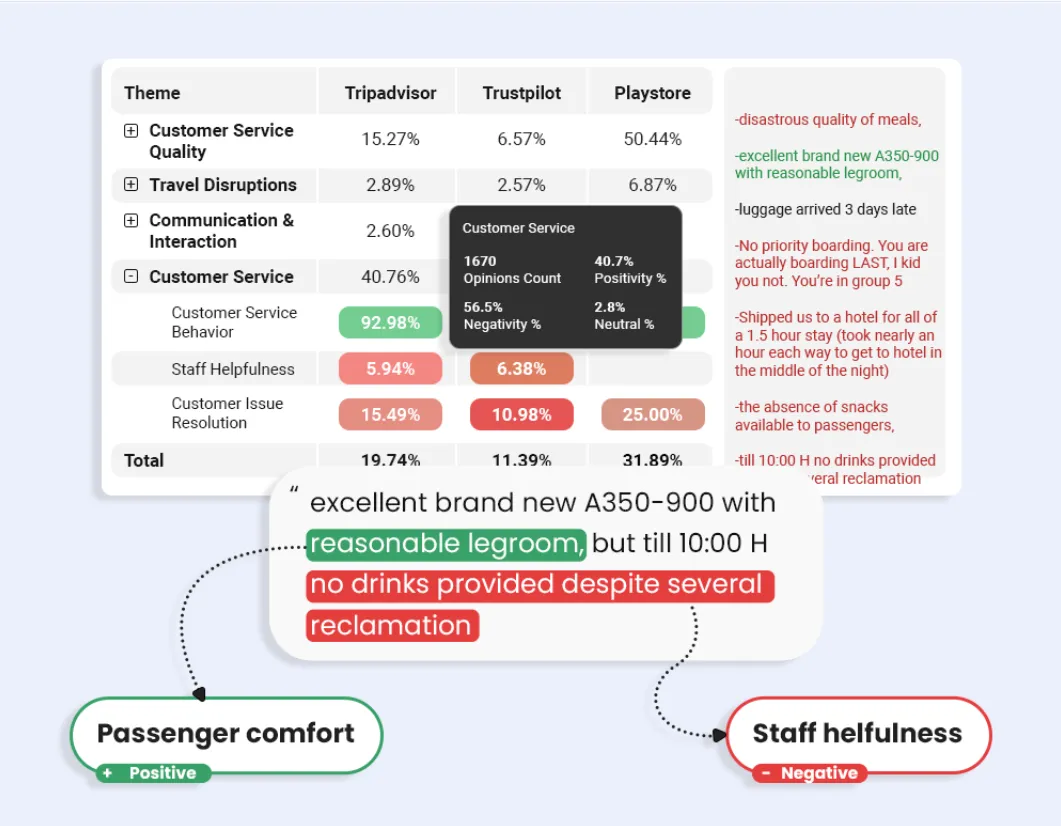
Voice of the Customer (VoC) is the process of capturing, analyzing, and acting on customer feedback about their experiences, expectations, and frustrations. It involves listening to what customers say—and don't say—through surveys, reviews, support calls, and social media, then using those insights across your organization to align strategies with what customers actually want.
VoC works in three stages. First, you gather feedback from various sources, both solicited (surveys, interviews) and unsolicited (reviews, social media). Then you analyze the data using tools such as text analytics and sentiment analysis to identify patterns and pain points. Finally, you share insights across departments and take action, closing the loop by showing customers their input led to real changes.
What separates VoC from basic feedback collection is scope. A true VoC program pulls together data from online reviews, support tickets, chat logs, social mentions, and surveys, creating a complete picture rather than scattered snapshots that live in different departments.
Why Voice of the Customer matters for business success
Without a unified VoC program, customer feedback stays trapped in silos. Marketing sees social comments, support tracks tickets, and product reviews survey data, but nobody sees the full story.
"In my experience, siloed operations are a challenge. Departments that are not interconnected and not all centered on the customer will disrupt the customer experience," says Katie Lukas, VP of Customer Experience and Consumer Insights at Cronin.
When you put customer reality at the center of decisions, you move from guessing to knowing. VoC also shifts your organization from reactive to proactive; instead of waiting for churn to spike or complaints to flood in, you can spot friction points early and address them before they escalate.
Key benefits of a Voice of the Customer program
Improved customer retention and loyalty
When you consistently meet or exceed expectations, customers stick around. A 5% increase in retention can drive up to 95% more profit. Knowing what drives satisfaction helps you build relationships that translate into repeat business and higher lifetime value.
Higher net promoter and satisfaction scores
VoC insights connect directly to measurable improvements in NPS and CSAT. By addressing the specific drivers of dissatisfaction, you can see tangible lifts in the metrics that matter most to leadership.
Watch demo to see Clootrack's customizable NPS AI agent in action ->
Reduced customer complaints and returns
Proactively identifying root causes prevents problems from escalating. For e-commerce brands, especially, knowing why customers return products can dramatically reduce return rates and associated costs.
Faster product innovation cycles
Customer feedback is a direct line to unmet needs. This insight validates roadmaps and reveals opportunities you might otherwise miss, helping you innovate with confidence rather than assumption.
Data-driven decision making across teams
VoC breaks down silos by providing a single source of truth. Product, marketing, support, and operations can all work from the same customer intelligence to make smarter, more coordinated decisions.
Voice of the Customer methods for collecting feedback
Modern VoC programs go far beyond surveys. A comprehensive approach requires consolidating both structured data (like survey responses with numerical ratings) and unstructured data (like free-text reviews and call transcripts) from multiple sources.
Surveys and feedback forms
Surveys include transactional and relationship surveys like NPS, CSAT, and Customer Effort Score (CES). Effective survey design considers timing, question clarity, and brevity; nobody wants to answer 47 questions after a simple purchase.
Online reviews and star ratings
Reviews on platforms like G2, Trustpilot, and app stores provide unsolicited, authentic feedback. They're invaluable for knowing public perception and how you stack up against competitors.
Social media listening
Monitoring brand mentions, hashtags, and sentiment across social platforms captures real-time, in-the-moment reactions. This is often where customers are most candid.
Contact center interactions
Support tickets, chat logs, and call transcripts are rich VoC sources. Analyzing contact center data at scale reveals the most common and urgent pain points, often before they show up in surveys.
In-product feedback
Embedded widgets and contextual prompts within your product capture feedback at the exact moment of experience. This context makes the insights far more actionable than a survey sent days later.
Behavioral and usage analytics
What customers do often tells you more than what they say. Clicks, feature adoption, and user flows reveal preferences and friction that explicit feedback might miss.
How to build an effective Voice of the Customer program
The most successful VoC programs follow a continuous Listen → Analyze → Act cycle.
1. Define your VoC objectives and KPIs
Start with outcomes, not activities. What business results do you want to impact? Tie your objectives to specific metrics like "reduce churn by 15%" or "increase NPS by 10 points."
2. Identify all feedback sources
Map every touchpoint where customers share feedback. Don't limit yourself to surveys: include reviews, social media, support interactions, and sales conversations.
3. Collect and consolidate VoC data
Use a platform with robust connectors to centralize feedback from all sources. Fragmented data leads to fragmented insights.
4. Analyze feedback for themes and patterns
Apply AI, text analytics, and sentiment analysis to process data at scale. The key is using technology that discovers themes without bias: revealing "unknown unknowns" rather than just confirming what you already suspect.
5. Share insights with cross-functional teams
Make insights accessible quickly. Role-based dashboards and automated reports ensure product, marketing, and support teams can act on findings while they're still relevant.
6. Take action and close the loop
Implement changes based on insights, then inform customers that their feedback led to improvements. This builds trust and encourages future participation.
7. Measure results and optimize
Track your KPIs to measure impact. VoC isn't a one-time project; it's a continuous improvement cycle.
How to analyze Voice of the Customer data
Many programs fail at this stage. They collect mountains of data but never extract actionable insights from it.
AI and Natural Language Processing
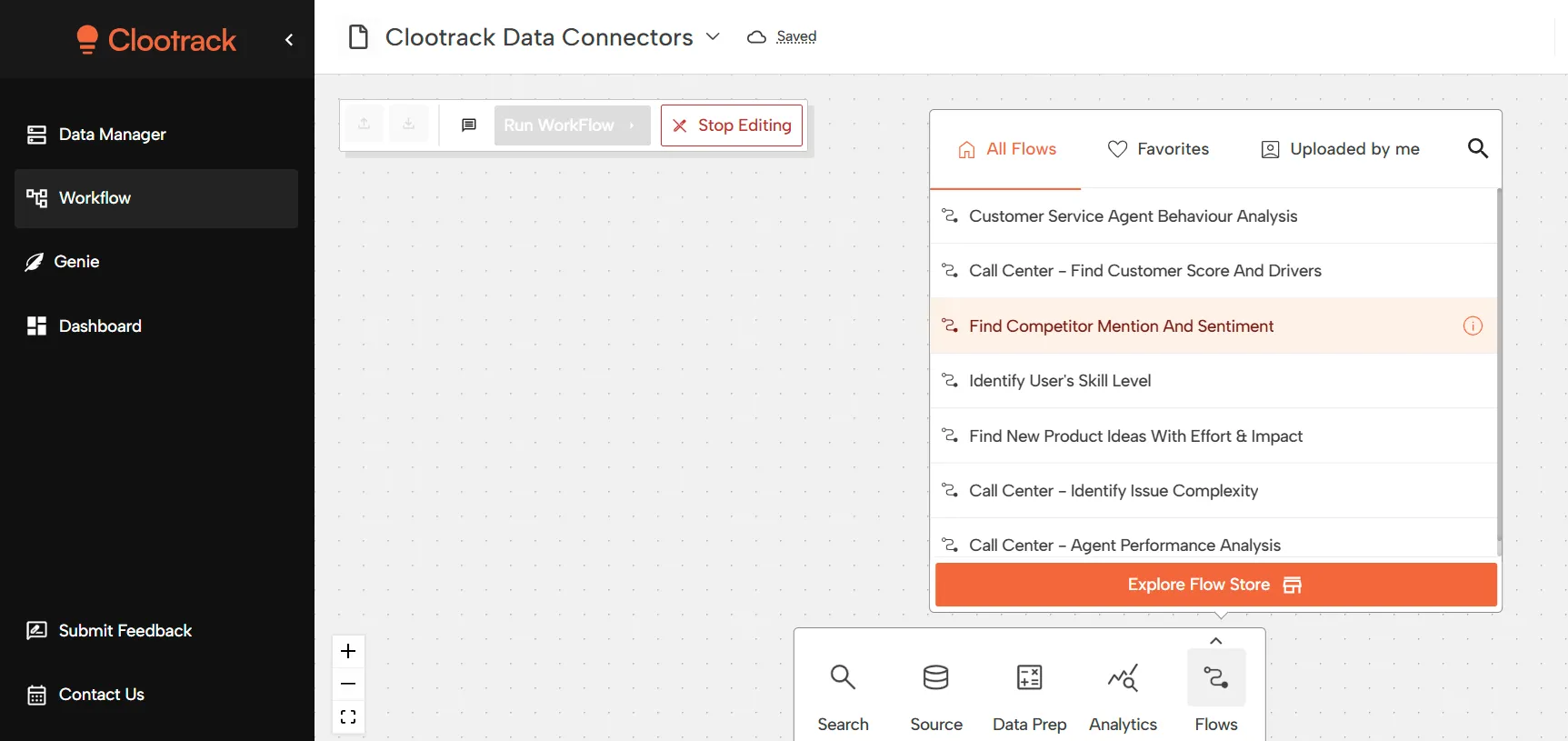
NLP (Natural Language Processing) enables computers to interpret human language. For VoC, this means analyzing massive volumes of unstructured text from reviews, tickets, and social posts at scale, something manual analysis simply can't match.
Sentiment analysis
Sentiment analysis automatically identifies emotional tone, categorizing feedback as positive, negative, or neutral. It helps quantify customer sentiment at a glance and track shifts over time.
Thematic analysis
Identifying recurring topics and issues is where the real value lives. The most advanced systems use unsupervised models, meaning they discover themes automatically without relying on pre-set categories. This unbiased approach reveals emerging issues you may not be looking for.
Root cause identification
Effective analysis goes beyond "what" to uncover "why." Drilling down from high-level themes (like "poor delivery experience") to specific root causes (like "late deliveries from a specific carrier") makes customer insights actionable.
Voice of the Customer metrics to track
Each metric reveals a different facet of customer experience:
- Net Promoter Score (NPS): Measures loyalty by asking how likely customers are to recommend you. Respondents become Promoters (9-10), Passives (7-8), or Detractors (0-6).
- Customer Satisfaction Score (CSAT): A direct measure of satisfaction, typically asked after specific interactions like a support call or purchase.
- Customer Effort Score (CES): Measures how easy it was to get an issue resolved. Lower effort strongly correlates with higher loyalty.
- Churn and retention rates: Connect VoC insights directly to business outcomes by tracking churn before and after implementing changes.
- Time to insight: How quickly can you move from raw feedback to actionable intelligence? Shorter cycles enable greater agility.
Voice of the Customer best Practices
1. Consolidate feedback from all channels
Analyze 100% of your VoC data, not just surveys. Critical patterns often hide in reviews, social media, and support interactions.
2. Prioritize unstructured data
The majority of customer feedback is unstructured text and voice. Programs that only analyze structured survey data miss the richest insights.
3. Remove bias from theme discovery
Pre-set categories cause you to miss new issues. Unsupervised analysis discovers themes organically from the data itself.
4. Connect insights to business outcomes
Tie findings to specific KPIs. Demonstrating how insights led to an NPS lift or reduced returns is key to proving ROI.
5. Enable real-time collaboration
Shared dashboards and automated workflows get the right insights to the right teams when they can actually act on them.
Common Voice of the Customer pitfalls
- Over-surveying customers: Too many surveys lead to fatigue and lower-quality responses. Supplement with passive feedback sources, such as reviews and social listening.
- Collecting without acting: Gathering data without acting erodes trust. Customers feel ignored, and resources go to waste.
- Keeping data in silos: When feedback stays within departmental silos, no one sees the complete customer journey.
- Chasing vanity metrics: Focusing only on top-line scores without knowing the "why" behind them leads nowhere.
- Ignoring unstructured feedback: The richest insights often live in reviews, social posts, and support conversations, not survey checkboxes.
The future of Voice of the Customer
Agentic AI and automated decision Briefs
The future lies in AI agents that synthesize insights and generate specific, data-backed recommendations. This moves focus from "what customers said" to "here's what you can do next."
Real-time analysis at scale
The shift is toward continuous, 24/7 customer intelligence rather than periodic backward-looking reports. Organizations can monitor sentiment and emerging issues across all channels in real time.
Predictive customer intelligence
By analyzing historical patterns, AI can anticipate future needs, predict churn risk, and identify opportunities before they become apparent, giving businesses a competitive edge.
Ready to turn fragmented feedback into clear business outcomes?
Clootrack's AI Super Agent analyzes 100% of your VoC data: structured and unstructured, using patented unsupervised models that discover themes without bias.
.webp)
FAQs
What is the difference between VoC and VoB?
VoC (Voice of the Customer) captures external customer feedback, while VoB (Voice of the Business) represents internal goals and constraints. Effective organizations align both to ensure customer needs are met within business realities.
How long does it take to implement a voice of the customer program?
Modern cloud-based platforms with pre-built connectors can go live within days. Fully managed services accelerate deployment by handling setup without requiring internal resources.
Can a voice of the customer program work without surveys?
Yes. Effective programs can leverage unsolicited feedback from reviews, social media, and contact center interactions. This passive approach often yields more authentic insights and avoids survey fatigue.
What is the typical ROI of a voice of the customer program?
ROI typically comes from reduced churn, higher lifetime value, decreased support costs, and improved product-market fit. Connecting insights directly to KPIs helps quantify impact.
Share :



Do you know what your customers really want?
Analyze customer reviews and automate market research with the fastest AI-powered customer intelligence tool.