
How GLP-1 side effects influence retail purchasing behavior

Last Updated:
April 24, 2026

Reading time:
Time
mins
GLP-1 side effects retail impact begins not in health outcomes but in purchasing behavior. The GI symptoms, appetite suppression, and physiological sensitivity that accompany GLP-1 use directly alter what consumers buy, when they buy it, and which categories they purchase across simultaneously, creating a cross-aisle retail customer behavior gap that surfaces as unexplained variance in category performance.
TL;DR
What is GLP-1 side effects retail impact? Appetite suppression narrows basket size. GI sensitivity narrows basket composition independently of appetite. Together they produce a structured weekly purchase system invisible to standard retail analytics.
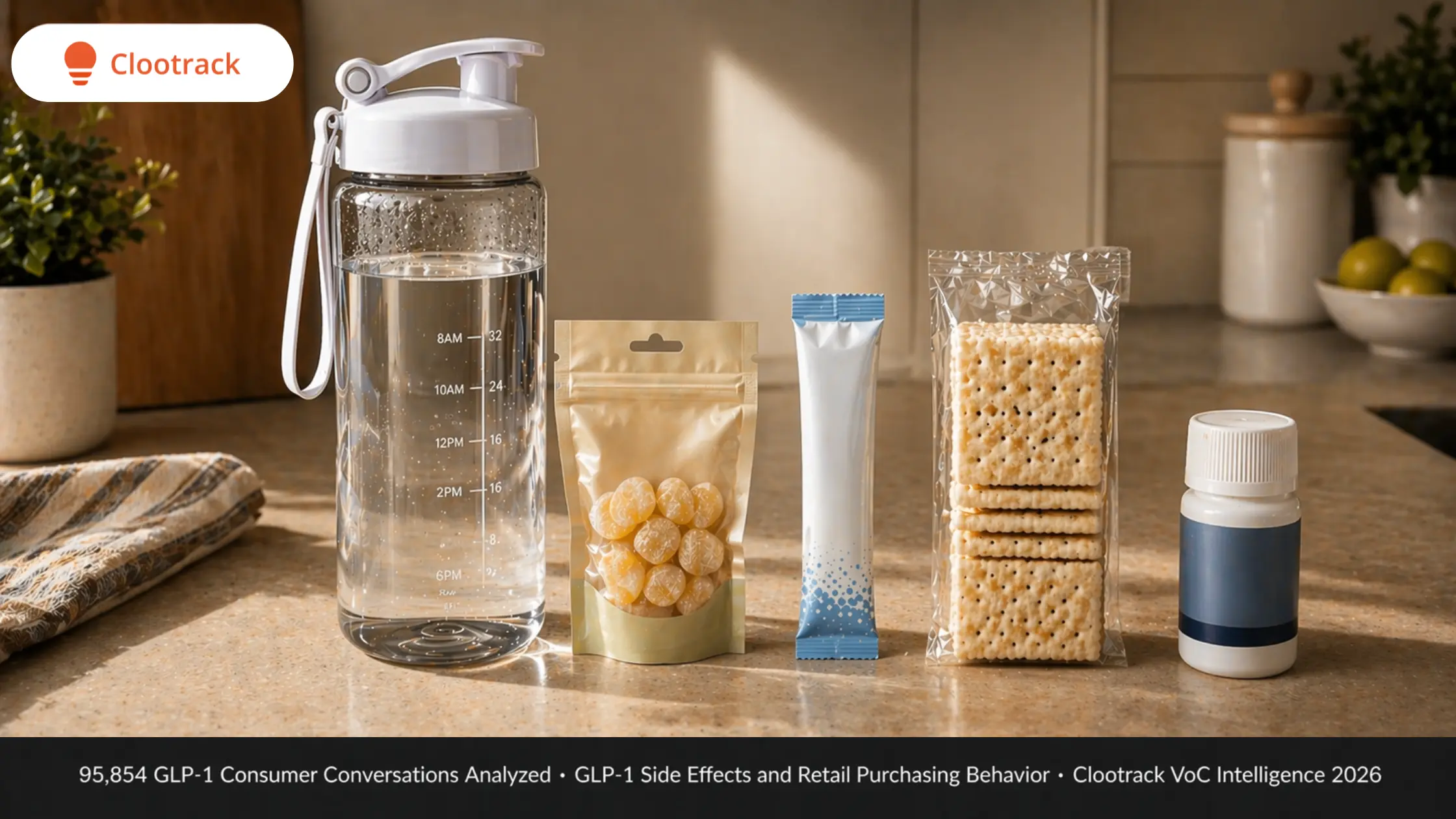
What is the GI stack? A coordinated weekly purchase set of hydration, ginger, electrolytes, OTC GI relief, and gentle foods restocked on a pharmaceutical schedule regardless of promotions.
Why is it a retail merchandising blind spot? The stack spans grocery, pharmacy, and wellness aisles simultaneously. No single category P&L captures it as a system.
What recalibration is required? Portion format assortment, cross-aisle merchandising, and promotional timing adjusted for both suppression-phase and normalization-phase consumer behavior.
What is GLP-1 side effects retail impact?
GLP-1 side effects retail impact is the structural change in consumer purchasing behavior driven by the physiological effects of GLP-1 medication at the product category and aisle level.
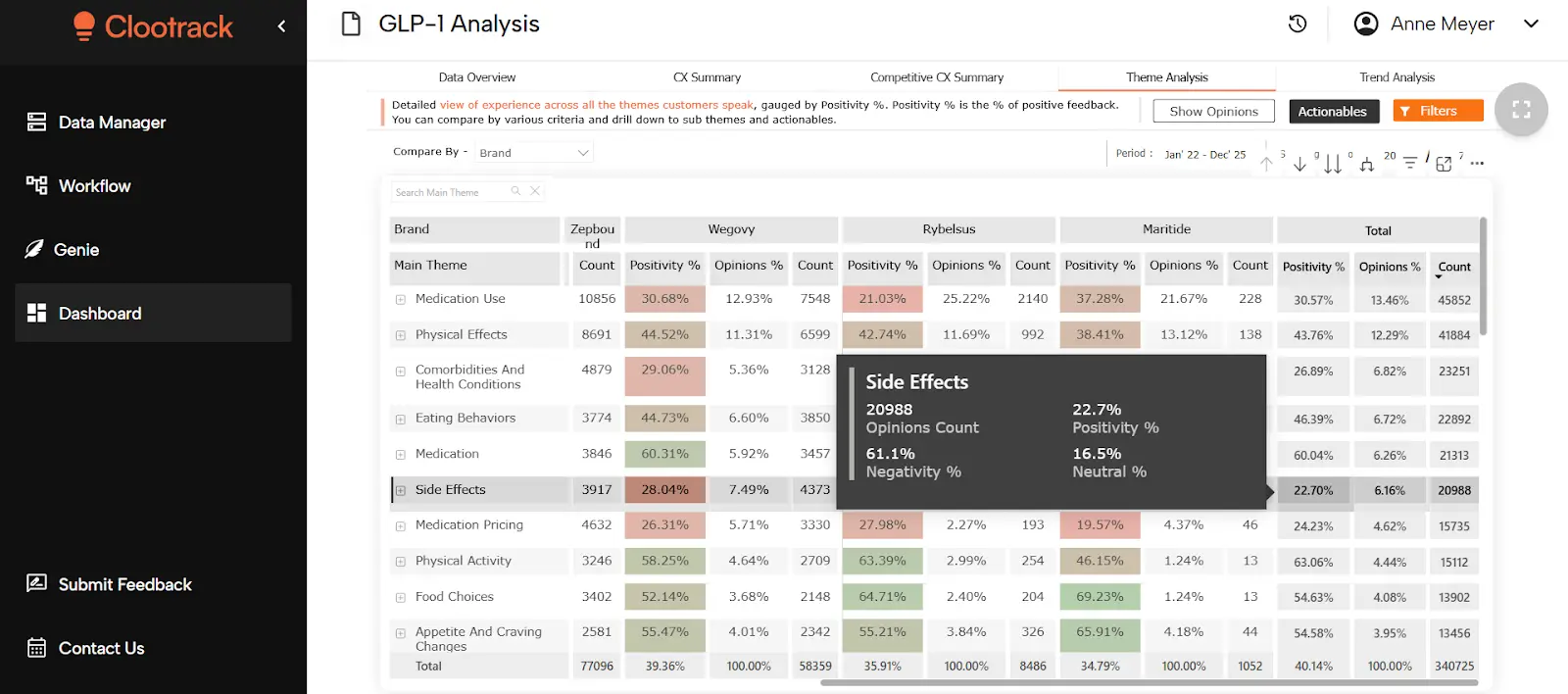
Across Clootrack's analysis of 95,854 GLP-1 consumer conversations collected between January 2022 and December 2025, 5,084 mentions were classified under GI Symptoms at 9.3% positive sentiment and 40.8% month-over-month growth. This is not a niche signal. It is a broad-based, accelerating behavioral pattern with direct purchasing consequences.
Two parallel mechanisms drive it.
Appetite suppression reduces food interest, portion tolerance, and purchase intent. A consumer in an active suppression phase is not choosing to buy less. They are physiologically unable to act on normal purchase motivation.
GI sensitivity operates as a separate filtering layer. Even when appetite partially returns, GI discomfort constrains which categories feel safe. Consumers describe nausea triggers, intolerance to heavy foods, and texture sensitivity as distinct from low appetite.
Basket composition changes independently of basket size, making a consumer buying at normal volume but in entirely different categories invisible to category-level velocity tracking.
The GI stack: From symptom to retail purchasing system
GI Symptoms at 9.3% positive confirms the problem is real and not resolving. Side Effects Management at 57.9% positive confirms consumers have found effective solutions. Hydration at 99.3% MoM growth confirms it has become a core weekly management behavior.
Consumer language confirms the system logic:
"Once I learned how to manage them by drinking a ton of water, ginger pills are essential, and Gas-X when necessary, they became manageable."
Consumers stock hydration in advance of injection days, maintain electrolyte supply, and rotate gentle staples based on tolerance.
For a full map of which categories this spend enters and exits, see retail category reallocation patterns in GLP-1 households.
Why the GI stack is a retail merchandising blind spot
1) Pharmaceutical cadence
The stack restocks every seven days regardless of promotions. The GI stack consumer is buying on a biological schedule, not a retail one. Promotional investment does not accelerate this purchase.
2) Cross-aisle distribution
The stack spans grocery, pharmacy, and wellness. No single category P&L captures the full system. This is the cross-dimensional pattern that Voice of Customer analytics detects before it confirms in transaction data.
3) Anxiety-driven activation
The stack is protective, not aspirational. Standard demand models built on occasion or aspiration signals will not identify the formation pattern.
Three planning recalibrations
1) Portion format assortment
Suppression-phase consumers need single-serve and small formats. Normalization-phase consumers return to standard formats. Assortment covering only one state creates a systematic blind spot.
2) Promotional timing
Volume promotions landing in the suppression phase reach a consumer who cannot act on them. Standard retail conversion analytics attribute this underperformance to creative, pricing, or assortment factors rather than the actual cause: phase timing mismatch.
3) Cross-aisle GI stack merchandising
The stack is self-assembled by consumers across disconnected aisles. Retailers who create coordinated cross-aisle visibility capture the full pharmaceutical-schedule repeat purchase and close the merchandising blind spot.
FAQs
How does GLP-1 affect grocery purchasing behavior?
GLP-1 side effects create two distinct basket changes within the same week. Appetite suppression reduces basket size early in the injection cycle. GI sensitivity narrows which categories feel safe to buy independently of appetite. The same consumer generates a suppression-phase functional basket and a normalization-phase standard basket within seven days.
What is the GLP-1 GI stack in retail?
A coordinated weekly purchase set of hydration, ginger, electrolytes, OTC GI relief, and gentle foods assembled to manage injection-related side effects. It restocks on a pharmaceutical schedule independent of promotions and spans grocery, pharmacy, and wellness aisles simultaneously.
Why are grocery promotions underperforming in GLP-1 penetrated markets?
Promotional spend landing during the suppression phase reaches a consumer who cannot act on it physiologically. Standard analytics attribute underperformance to offer quality or pricing rather than phase timing mismatch. Recalibrating promotional timing to late-week normalization windows closes this gap.
How does GLP-1 affect CPG category performance?
GLP-1 side effects shift demand from full-format, heavy, or complex food categories toward gentle, functional, and small-format products during the early suppression phase. This shift is temporary within each week but recurring across every injection cycle, creating persistent demand volatility that monthly category averages smooth into a flat signal.
What retail categories are most affected by GLP-1 consumer behavior?
Grocery and pharmacy categories are most directly affected through the GI stack economy. Hydration, ginger products, electrolytes, and OTC GI relief see pharmaceutical-schedule recurring demand. Heavy proteins, greasy formats, and large portions face consistent suppression-phase avoidance.
Share :



Do you know what your customers really want?
Analyze customer reviews and automate market research with the fastest AI-powered customer intelligence tool.