%201%20(1).svg)
GLP-1 beauty category reallocation: From aspiration to structural repair

Last Updated:
May 4, 2026

Reading time:
Time
mins
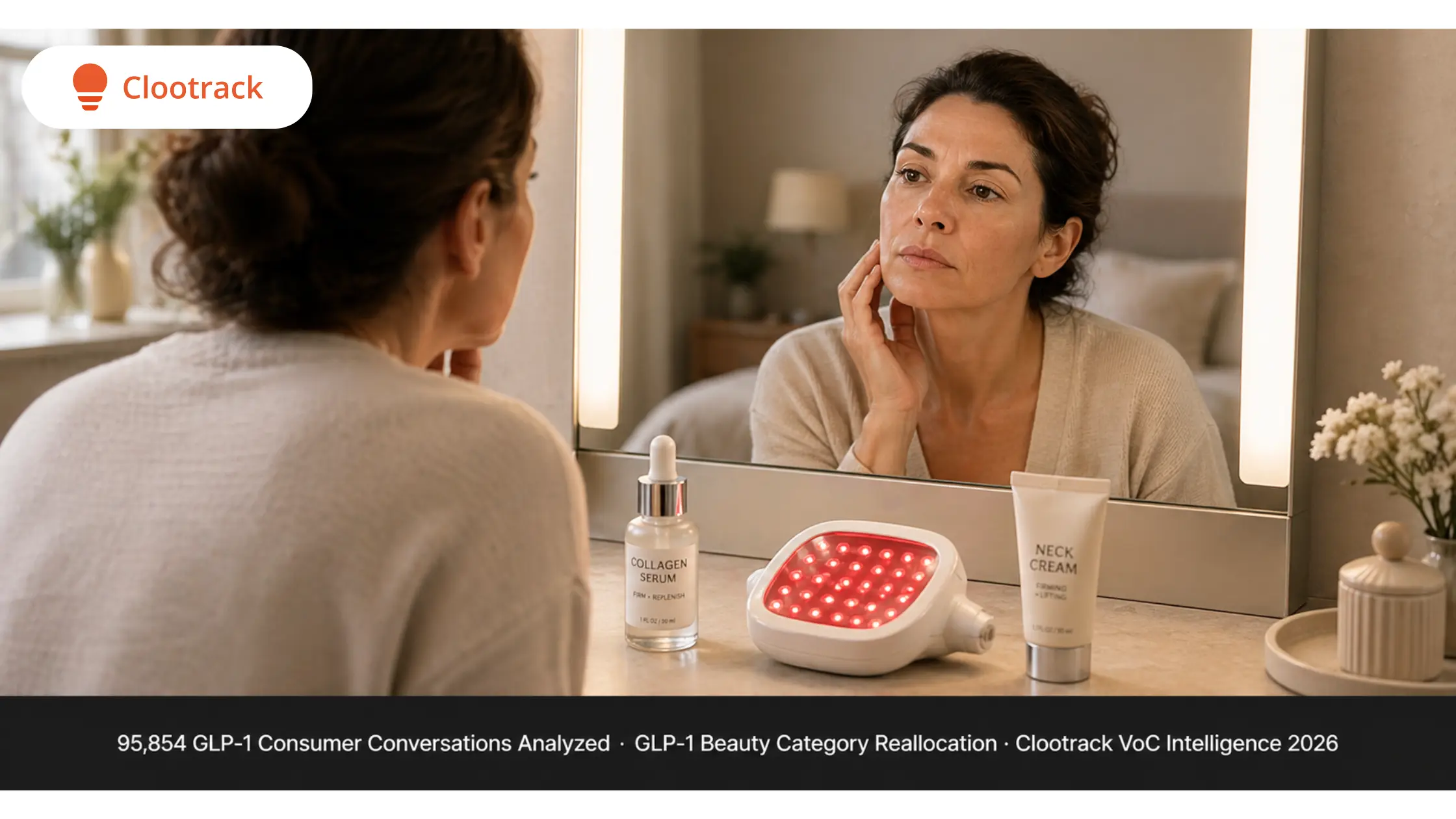
GLP-1 beauty category retail impact is a reallocation story, not a growth story. Beauty spending is shifting from aspiration toward structural skin repair. Most retail beauty shelves are still organized around the motivation that moved on.
TL;DR
What is GLP-1 beauty category reallocation? The structural shift from aspirational beauty spending toward corrective and restorative categories driven by facial volume changes from rapid weight loss.
What is the repair economy? A coordinated multi-product corrective routine spanning firming serums, collagen supplements, red light devices, and neck treatments that consumers are assembling independently.
What is permanence hesitation? Consumer uncertainty about whether facial deflation is permanent before committing to corrective investment, creating a gap between intent and purchase invisible in sales data.
What is the correct retail response? Bundle corrective products as coordinated systems. Position at-home devices as non-surgical alternatives. Use educational messaging to address permanence hesitation directly.
What is GLP-1 beauty category reallocation?
GLP-1 beauty category reallocation is the structural shift in beauty spending from decorative and aspirational categories toward corrective and restorative categories resulting from facial volume changes that accompany rapid GLP-1 weight loss.
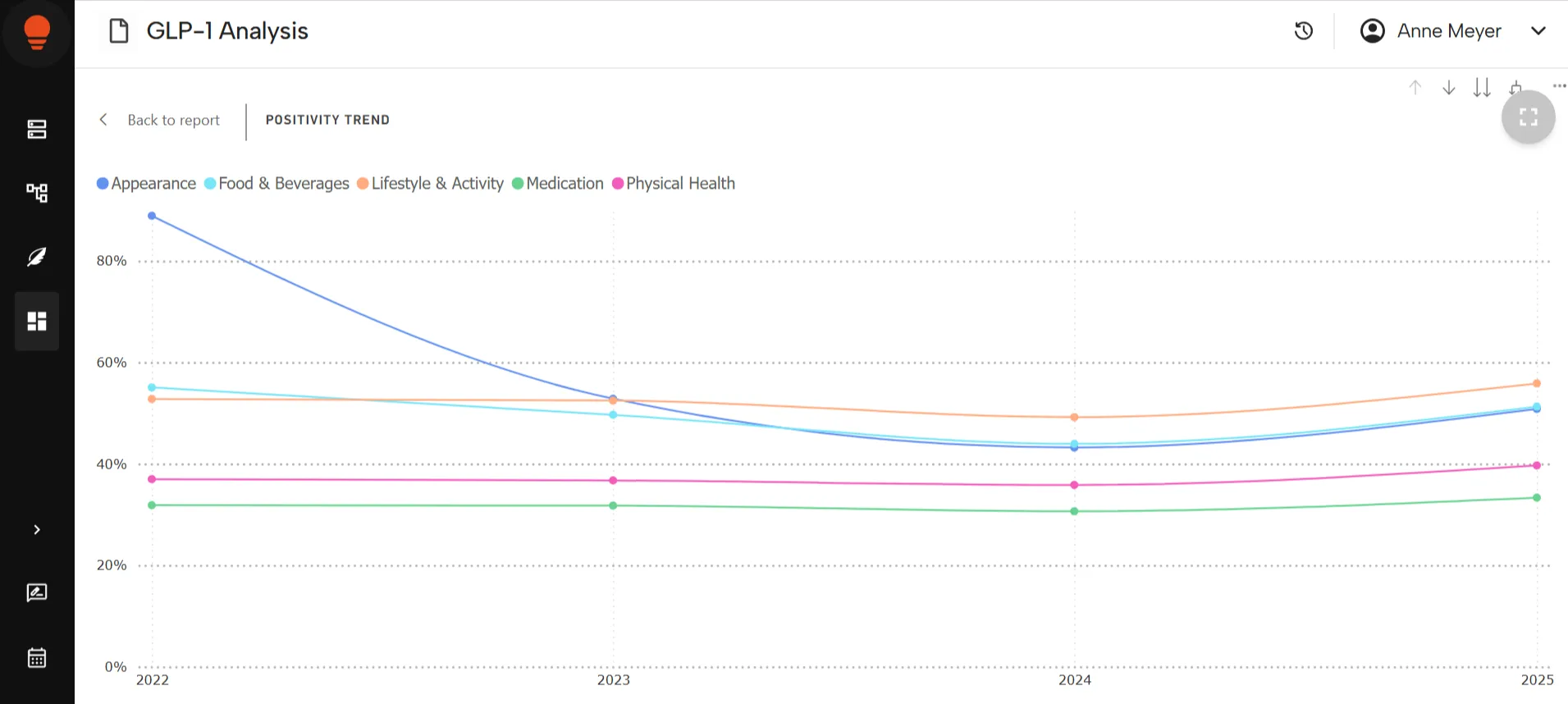
The reallocation occurs through routine construction across multiple categories simultaneously, not through single hero product purchases. Understanding what GLP-1 retail impact means for consumer behavior analytics establishes the broader framework this beauty shift operates within.
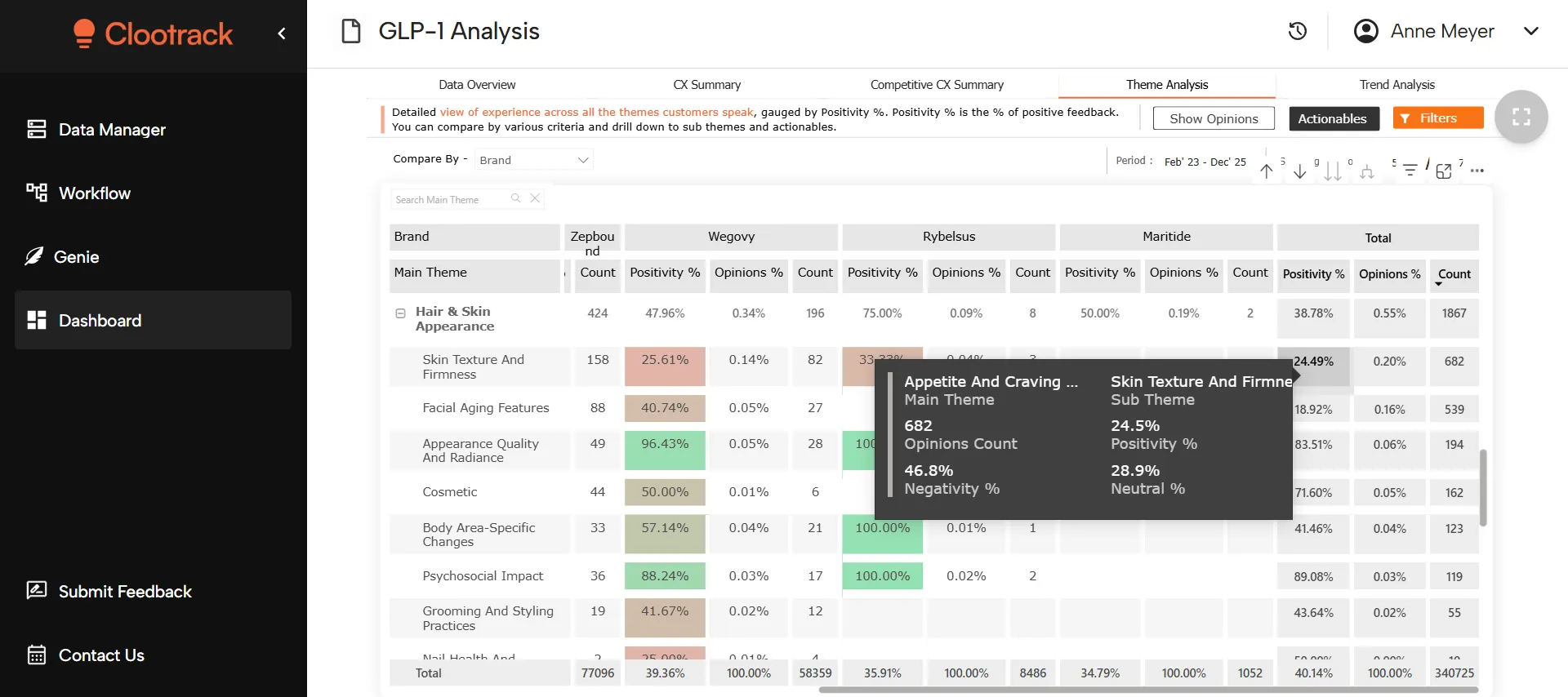
The deflation anxiety mechanism
Low positivity in problem themes alongside high positivity and high growth in the solution theme is the commercial signal. Formation is happening now. Revenue confirmation follows later.
Consumer language confirms the mechanism:
"The only disappointment was suddenly seeing a gaunter face that aged ten years in the mirror within a few months."
“I have always had naturally good skin, but I knew the loss of facial volume could cause my appearance to age and took immediate mitigating steps”
The repair economy
Consumers are independently assembling coordinated corrective routines without any retailer merchandising them as a system:
"My Morning Routine: Cleanser La Roche-Posay, Copper peptide serum, Red light therapy HOOGA panel."
"Oh I also bought something called TL Advanced tightening neck cream, it helped with wrinkles on the sides of my neck."
Firming serums, collagen supplements, red light therapy devices, and neck-specific treatments are sitting in separate aisles. The economic unit has shifted from a single hero product to a structural skin management system.
This repair economy is one component of the broader retail category reallocation across GLP-1 households spanning grocery, fitness, apparel, and household spending simultaneously.
Beauty retail merchandising blind spots
- System-level demand distribution. The corrective routine spans multiple aisles simultaneously. No single category P&L captures the full corrective routine spend.
- Motivation misread. The 927.8% MoM growth in cosmetic interventions is repair-driven, not celebration-driven. Repair-driven demand requires system merchandising and educational messaging, not aspirational shelf positioning.
- Permanence hesitation timing gap. Standard sales data reads the gap between intent and purchase as soft demand. It is delayed conversion, not absent demand.
Recalibration framework
- Bundle corrective products as systems. Firming routines, at-home repair devices, and collagen-anchored skincare bundled as coordinated systems rather than separate hero products.
- Position at-home devices as accessible alternatives. Red light devices, microcurrent tools, and LED masks offer lower cost than professional treatments without clinical commitment.
- Address permanence hesitation through education. Messaging specific to rapid weight change and skin response converts intent-ready consumers who are delaying purchase, not rejecting it.
For the full five-domain analysis see the GLP-1 effect on U.S. retail report.
FAQs
How does GLP-1 weight loss affect beauty purchasing behavior?
GLP-1 weight loss causes facial hollowing, skin laxity, and accelerated visible aging that shift beauty spending from aspiration toward correction. Consumers independently assemble corrective routines across firming, collagen, and device categories without any retailer merchandising them as a system.
How is GLP-1 changing beauty retail category performance?
GLP-1 is shifting beauty demand from aspirational toward corrective categories, with cosmetic interventions growing at 927.8% MoM driven by facial deflation anxiety. Category metrics reading this as aspiration returning will invest in the wrong product tiers and miss the repair economy forming.
Why are beauty sales soft in GLP-1 penetrated markets despite rising consumer interest?
Consumers delay corrective beauty investment while uncertain whether facial deflation is permanent, creating a gap between intent and purchase that reads as soft demand. It is delayed conversion, not absent demand.
How should beauty category planners adjust merchandising for GLP-1 consumers?
Bundle corrective products as coordinated systems, position at-home devices as non-surgical alternatives, and use educational messaging specific to rapid weight change rather than general anti-aging. These three recalibrations address system-level demand that no single category P&L currently captures.
How does GLP-1 deflation anxiety differ from standard anti-aging demand?
Standard anti-aging demand is gradual and aspiration-framed. GLP-1 deflation anxiety is rapid onset and repair-framed, requiring completely different product positioning, adjacency design, and messaging.
Which beauty sub-categories are growing in GLP-1 households?
Firming serums, collagen supplements, at-home red light therapy devices, microcurrent tools, and neck-specific treatments. Retailers merchandising these as coordinated systems capture full corrective routine spend rather than isolated product velocity.
Share :



Do you know what your customers really want?
Analyze customer reviews and automate market research with the fastest AI-powered customer intelligence tool.