%201%20(1).svg)
GLP-1 body change and apparel purchase behavior: A guide for retail merchandising leaders

Last Updated:
May 20, 2026

Reading time:
Time
mins

GLP-1 is changing how U.S. consumers shop for apparel. Store traffic from GLP-1 households is rising. Wardrobe replacement intent is high. Yet Clootrack's analysis of 95,854 GLP-1 consumer conversations shows Purchase Frequency sitting at 0% month-over-month growth. The demand is present. The transaction is not happening. This knowledge base explains the specific mechanism behind that gap and what retail merchandising leaders can do about it.
Key findings from 95,854 GLP-1 consumer conversations:
- Store traffic is rising. Purchase Frequency sits at 0% MoM growth.
- Body Dysmorphia growing at 74.4% MoM at 11% positive sentiment confirms negative body perception is accelerating faster than confidence recovery.
- Fashion Confidence at 218.9% MoM at 98.6% positive confirms the hesitation window is temporary.
- Footwear and accessories at 78.3% positive sentiment are converting now without requiring identity resolution.
TL;DR
Why is apparel conversion stalling for GLP-1 consumers despite rising traffic?Identity lag, the gap between measurable physical body change and the psychological self-perception update that follows, suppresses purchase confidence despite rising store traffic.
What are the three constraints stopping GLP-1 consumers from buying apparel?Size uncertainty during active weight loss, financial waste perception around mid-transition wardrobe investment, and psychological identity lag that makes purchasing for an unrecognized size feel inauthentic.
Which apparel categories are growing in GLP-1 households right now?Footwear and accessories at 78.3% positive sentiment convert without requiring identity resolution. Fashion Confidence at 218.9% MoM growth confirms clothing conversion recovery is forming for consumers approaching weight stabilization.
What should retail merchandising leaders do about GLP-1 apparel conversion?Friction reduction including exchange-forward policies, fit verification tools, and transitional format assortment, not discounting.
What is identity lag in GLP-1 apparel behavior?
Identity lag is the gap between measurable physical body change and the internal psychological adjustment that follows. GLP-1 consumers describe knowing intellectually that their body has changed while not yet feeling that change as part of their identity.
The commercial consequence is direct. Consumers who do not internally recognize their new size will not confidently purchase apparel for it. They visit stores to verify change has occurred. They try on items to confirm fit. They leave without buying.
The result is a retail pattern that standard diagnostics misread entirely: traffic metrics appear healthy while conversion softens. The mechanism is psychological, not commercial. Standard retail interventions do not address it.
Understanding why requires understanding what GLP-1 retail impact means for consumer behavior analytics at the formation layer, before it confirms in transaction data.
The data behind the hesitation
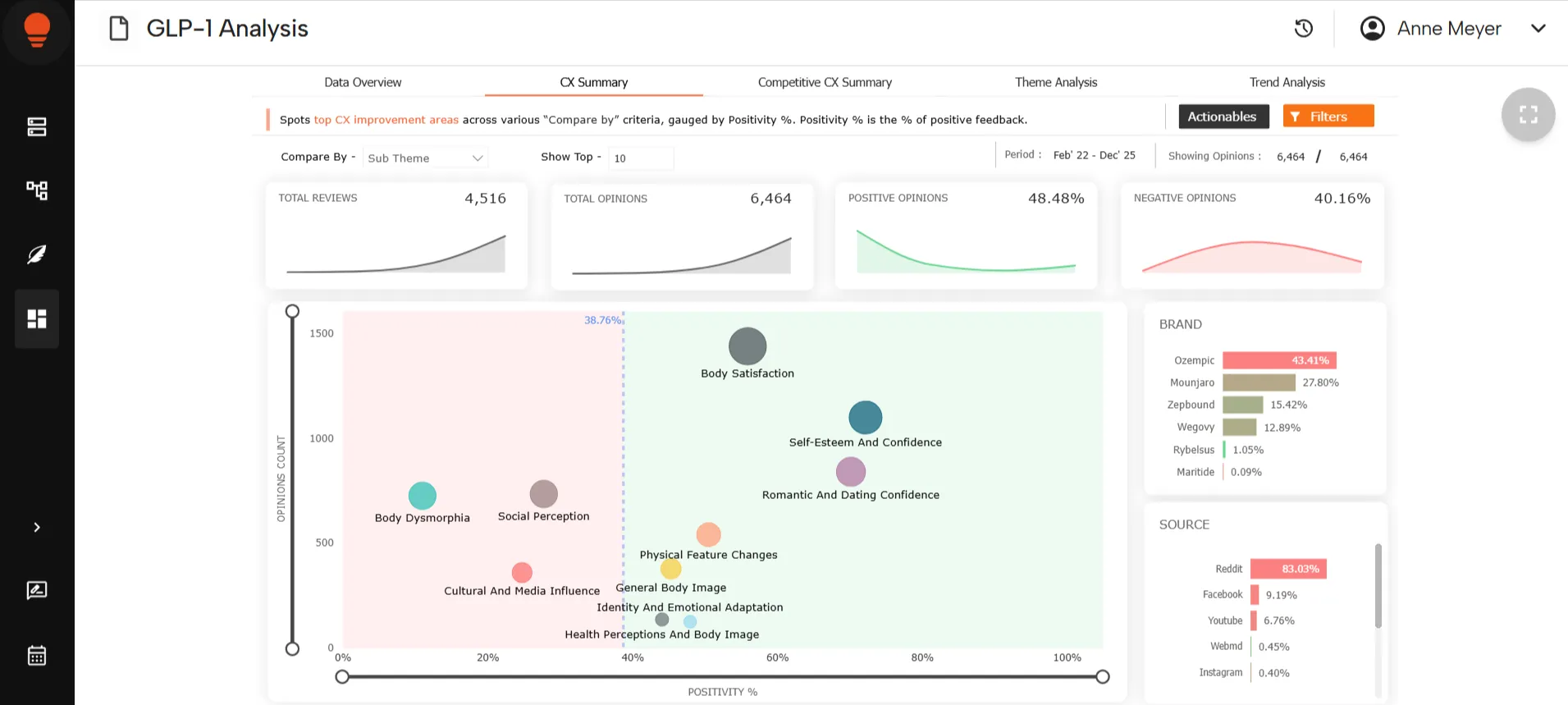
Body Dysmorphia at 11% positivity growing at 74.4% MoM confirms negative body perception is accelerating faster than positive confidence recovery. Wardrobe Transition Costs at 116.7% MoM at only 42.5% positivity confirms cost anxiety around replacement is intensifying. Purchase Frequency sits at 0% MoM growth, desire is present but conversion is not happening.
Fashion Confidence at 98.6% positivity and 218.9% MoM growth is the counter-signal. Identity recovery is forming beneath the hesitation for consumers approaching weight stabilization.
Three constraints driving purchase paralysis
- Size uncertainty makes any apparel purchase during active weight loss feel premature. Consumers do not know when weight loss will stabilize, making current-size purchases feel financially irrational.
- Financial waste perception compounds this. Consumer language consistently includes words like "temporary," "in between," and "don't want to waste money." This perception is most acute in basics including underwear, foundational items, and everyday essentials, the first items to no longer fit and the ones generating the most frustration without any satisfaction from replacement.
- Psychological identity lag is the deepest constraint and the one that does not respond to price reduction. Purchasing clothing for a size consumers do not internally recognize feels inauthentic. This resolves through time and through retail experiences that help consumers verify and trust their new size, not through discounting.
The financial waste perception in apparel mirrors the broader GLP-1 household spend reallocation pattern where consumers are actively sequencing defensive spending before expressive spending.
Where positive demand is forming now
Footwear and accessories carry 78.3% positive sentiment and show immediate reallocation. Consumer language frames these as capability restoration purchases, items becoming wearable again after weight loss. This demand does not require identity resolution to convert and captures spending that clothing conversion is currently missing.
Fashion Confidence at 218.9% MoM growth confirms clothing conversion recovery is already underway for consumers who have reached weight stabilization. Style Evolution at 126.7% MoM and Style Preference Changes at 114.8% MoM confirm the directional trend. The hesitation window is temporary.
Retailers present during the hesitation window build the relationship that captures the recovery. Those who exit during conversion suppression do not.
Friction reduction framework
The correct response to identity lag is reducing the cost and risk of being wrong about size, not reducing the price of the product.
- Exchange-forward policies remove the financial penalty of buying at the wrong stage of transition and directly address the size uncertainty constraint.
- Fit verification tools including in-store measurement support, size recommendation technology, and virtual try-on answer the confirmation question consumers are asking when they use fitting rooms as verification environments.
- Transitional format assortment including flexible fit designs, adjustable waistbands, stretch fabrics, and bridge sizing reduces size-specific purchase risk during active weight loss.
- Footwear and accessory positioning around restored wearability rather than trend adoption aligns with where consumer motivation already sits without requiring identity resolution.
For the broader commercial analysis see the GLP-1 retail impact report.
FAQs
Why is apparel conversion stalling for GLP-1 consumers despite rising store traffic?
GLP-1 consumers use fitting rooms to verify that body change has occurred rather than to shop. Traffic reflects verification behavior. Conversion reflects purchase confidence, which requires identity adjustment that takes longer than physical change. The gap between the two is identity lag.
How does GLP-1 body change affect retail merchandising strategy?
The standard merchandising response to softening conversion is assortment adjustment or promotional investment. Neither addresses identity lag. The correct response is friction reduction: exchange-forward policies, fit verification tools, and transitional format assortment that reduce the risk of being wrong about size during active weight loss.
Which apparel categories are growing despite the GLP-1 conversion stall?
Footwear and accessories carry 78.3% positive sentiment and convert without requiring identity resolution. Fashion Confidence at 218.9% MoM growth signals recovery forming for consumers at weight stabilization. Style Evolution at 126.7% MoM and Style Preference Changes at 114.8% MoM confirm the directional trend.
Why doesn't discounting fix the GLP-1 apparel conversion problem?
The friction is psychological and risk-based, not price-based. Consumers are not avoiding purchase because apparel is too expensive. They are avoiding it because buying at the wrong size during active weight loss feels financially irrational and psychologically inauthentic. Price reduction addresses neither constraint.
How long does the GLP-1 apparel hesitation window last?
The hesitation window corresponds to the period of active weight loss before stabilization. Fashion Confidence growing at 218.9% MoM among consumers approaching stabilization confirms recovery is already forming. The window is a transition period, not a permanent behavioral state. Retailers present during it are better positioned to capture the recovery spend.
What does GLP-1 body change mean for apparel returns and inventory planning?
Size uncertainty during active weight loss increases return risk for standard-fit apparel purchased mid-transition. Inventory planning should account for higher return rates in fitted categories and reduced velocity in premium structured apparel during the hesitation window. Flexible fit formats and accessories carry lower return risk during this period.
Share :



Do you know what your customers really want?
Analyze customer reviews and automate market research with the fastest AI-powered customer intelligence tool.