%201%20(1).svg)
Customer feedback analysis and analytics: definitions, differences, and examples

Last Updated:
January 30, 2026

Reading time:
Time
mins

Customer feedback analysis explains why customers feel or behave a certain way, while customer feedback analytics measures what is happening and how it changes over time.
TL;DR
- Customer feedback analysis explains why customers feel or behave a certain way by interpreting themes and sentiment in open-ended feedback.
- Customer feedback analytics measures what is happening and how much it changes over time using metrics such as NPS, CSAT, and CES.
- Analysis provides context and root causes; analytics provides scale, trends, and benchmarks.
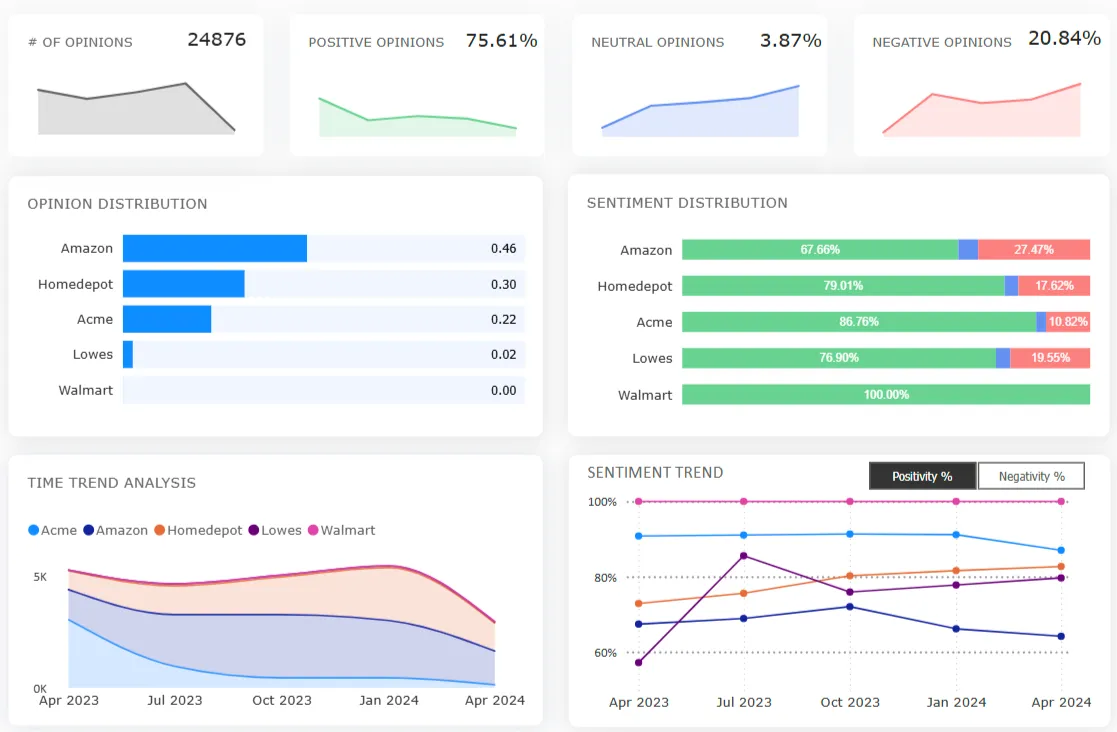
- Dashboards bring both together by showing analysis outputs alongside analytics metrics in one view.
What is customer feedback analysis?
Customer feedback analysis interprets unstructured customer feedback to identify themes, sentiment, and reasons behind behavior. It focuses on understanding context rather than measuring frequency.
Example: If customers mention "slow support" in comments, analysis groups these into themes explaining dissatisfaction.
Focus: Meaning in open-ended feedback
Methods: Thematic coding, sentiment interpretation, text categorization
Output: Root causes, pain points, experience drivers
What is customer feedback analytics?
Customer feedback analytics quantifies feedback using metrics to measure patterns and changes over time. It focuses on scale and trend tracking.
Example: Analytics shows CSAT increased from 75% to 90% over six months, or detractors are higher in one segment.
Focus: Measurement and trends
Methods: NPS, CSAT, CES tracking, data aggregation
Output: Trends, benchmarks, segmentation insights
Customer feedback analysis vs analytics: key differences
Where do dashboards fit?
Dashboards display analysis outputs alongside analytics metrics in one view. They monitor results and identify issues requiring attention.
Function: Present both qualitative and quantitative data
Benefit: Faster visibility into drivers and trends
Application: Data-backed decisions for product/CX teams
Best practices for using feedback analysis and analytics together
- Collect across channels: Surveys, reviews, support, social media, in-product feedback
- Analyze before measuring: Identify themes before quantifying impact
- Use dashboards for visibility: Track experience drivers against NPS/CSAT
- Act on insights: Improve products, services, customer experience
Related guides: Customer feedback KB, Customer reviews KB, Advanced KB, for deeper dives.
Conclusion
Analysis explains customer experience drivers; analytics measures their scale and change. Using both enables clearer understanding and informed decisions.
View product tour. Create new analysis today.
FAQs
What is customer feedback analysis?
Customer feedback analysis interprets qualitative feedback to uncover themes, sentiment, and reasons behind customer behavior.
How does customer feedback analytics differ from analysis?
Analytics quantifies feedback using NPS/CSAT metrics, while analysis explains the qualitative reasons behind those numbers.
Can customer feedback analysis be used without analytics?
Yes, but without analytics you can't measure scale, track trends, or benchmark performance.
What methods are used in customer feedback analysis?
Thematic coding, sentiment interpretation, structured text analysis of open-ended feedback.
How do dashboards help with customer feedback?
Dashboards visualize analysis outputs alongside analytics metrics for faster monitoring and decisions.
Is analysis or analytics more important?
Neither alone. Analysis provides understanding; analytics provides measurement. Both are essential.
Share :



Do you know what your customers really want?
Analyze customer reviews and automate market research with the fastest AI-powered customer intelligence tool.